
Georgetown Resident Record Sources
Treat every result as a role, not an answer. Ottawa County's parcel system can show an assessed owner, the situs address, a separate tax-mailing address, the parcel PIN, and a legal description. The free Register of Deeds index then ties a named party to a recorded transfer. Michigan court and vital sources add dates. No single record proves a full household. Set a time and place with your first find, then chase a second independent record that agrees with it. That cross-check is the whole method.
| Source | Identity detail | Custodian | Access route |
|---|---|---|---|
| Property and GIS roll | Assessed owner, PIN, situs and mailing addresses | Ottawa County Property Search | Public owner, parcel, or address search |
| Recorded instruments | Named parties, recording date, document and parcel links | miOttawa Deeds | Free index; images cost $1 per page plus a convenience fee |
| Court summary | Case number, parties, status, filing and disposition signals | Michigan MiCOURT | Public summary, then clerk or counter for the file |
| Vital index or certificate | Event, relationship, date, and place leads | Ottawa County Clerk | Online, mail, counter, or genealogy station as available |
| Historical collection | Household, cemetery, yearbook, or obituary context | Georgetown local history | Library room, JHA, archives, and linked databases |
Start with what you already hold. A current street address points to the parcel roll. A recorded name with a date belongs in the deeds index. A life event or family connection fits the clerk's vital search, the genealogy station, or the state index. Older Georgetown names work differently. The history room and the Archives of Michigan often bridge a modern parcel to a dated household record.
Georgetown Resident Names and Parcels
The Ottawa property search accepts an owner last name, a segmented parcel number, or a house number and street. Read the results slowly. The situs address identifies land in Georgetown Township. The mailing address is where tax bills go. A mailing address in another town or state is a correspondence clue, not proof of residence there. Principal Residence Exemption can support an owner-occupancy guess. It never names everyone at the address. Save the FinalPIN exactly as returned. In the GIS layer, that PIN links the property summary, parcel geometry, tax and split history, and deeds search. A parent or condo PIN can also explain an odd mismatch. The county notes that local units update owner names and addresses. An uncertain result deserves a call to assessing or a parcel-error question, not an assumption that the screen is current.
Georgetown Resident Court Checks
MiCOURT Case Search is the statewide first pass. It covers Georgetown Township matters in the 20th Circuit, Probate, or 58th District court. Accept the terms first. Then search by participant name or case number. Filters, where offered, narrow further by category, year, status, or filing dates. The public result is informational. It may omit files or documents, and some courts apply a seven-year criminal-sentence filter. A name hit proves little alone. Corroborate with court geography, a date, a party role, or a separate local record. The screen is only a lead. For an older, suppressed, or thin Georgetown case, contact the court division listed in the case. You can also reach the 20th Circuit records office. Documented fallbacks include counter inspection. They also include a specific request for a docket, register of actions, filing, disposition, or certified copy. Confirm the current reproduction or certification charge with the clerk before payment. The official MiCOURT search opens with a terms screen before the searchable case interface.
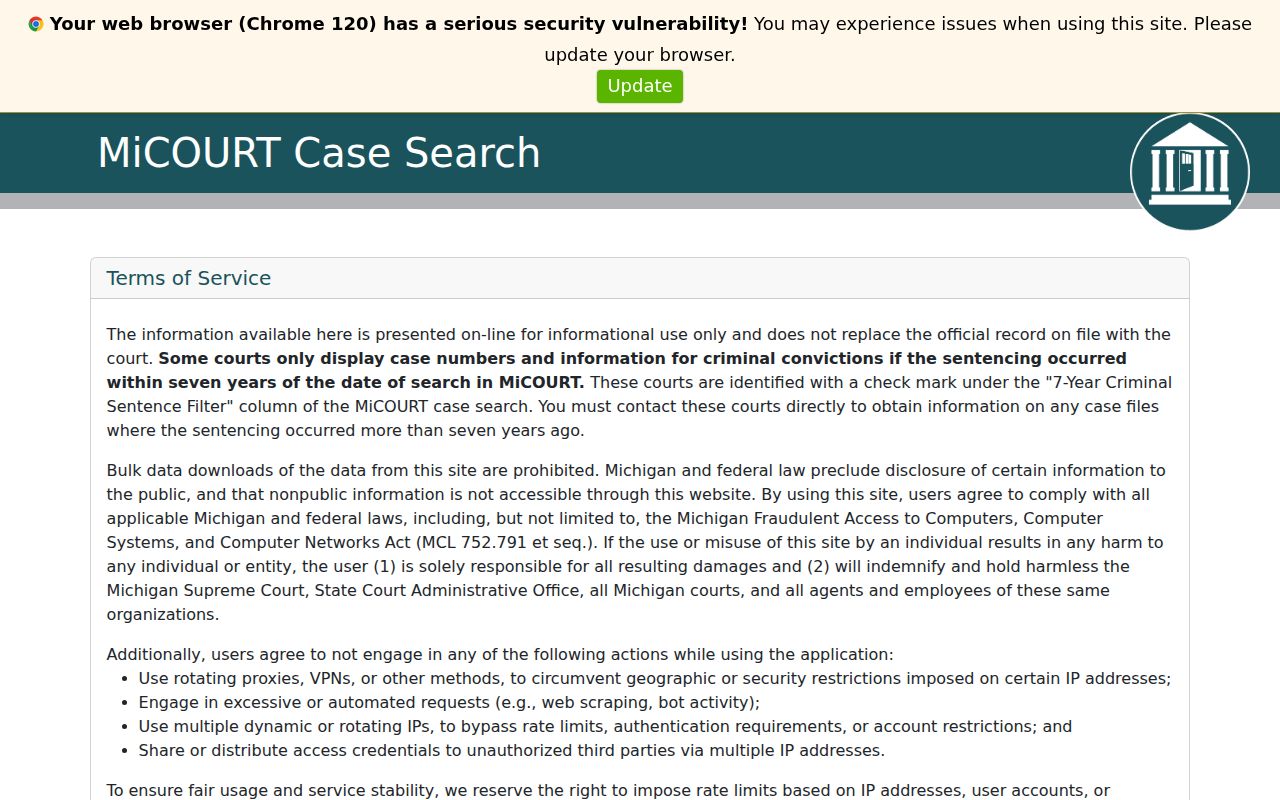
Match the court and date details from the result when you request the official file. A name alone settles nothing.
Georgetown Resident Vital Checks
Vital records can test a relationship. Ottawa County splits its death search into 1867–1945, 1946 through April 15, 2025, and April 16, 2025 to the present. The marriage search runs 1848–1912, 1913 through October 28, 2019, and October 29, 2019 to the present. The descriptions overlap. The genealogy page also lists a self-service computer in the West Olive Clerk's Office, holding electronically archived deaths back to 1867 and marriages from 1905. Call before presuming any particular year is online. The county lists $15 for a first or unique copy. Another copy of the same record costs $6. Online orders add technology or convenience charges where applicable. A paper application handles mail and counter requests. County birth records carry eligibility and identification limits, while certified death, marriage, and divorce records follow Michigan's specific access rules. A full divorce file stays with the court. Michigan's GENDIS is a free historic-death lead. It covers 1867–1897 and allows surname, first name, father surname, county, and year searching. Ottawa County's vital-record order interface displays its event bands, eligibility questions, and ordering route.
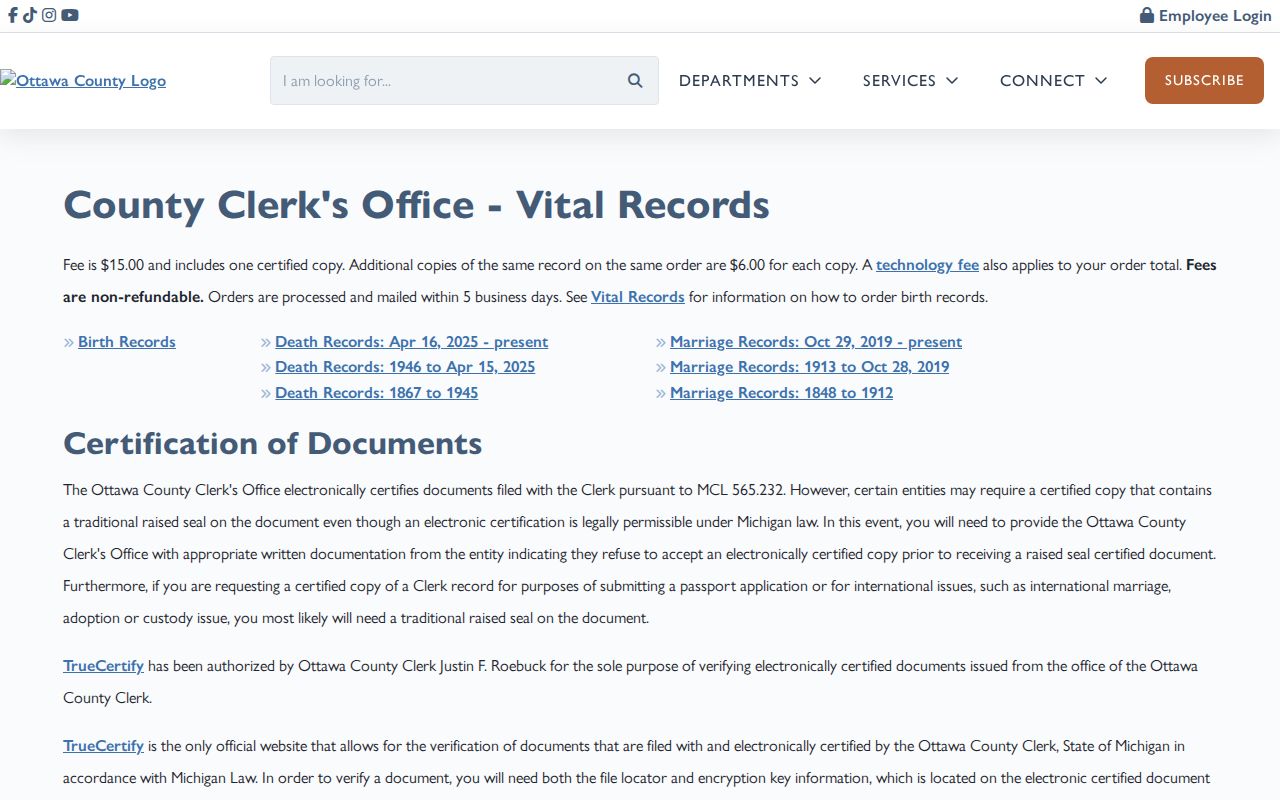
An index or order result is a starting point. When the relationship or event must be verified, follow up with the Clerk's Office or the state custodian.
Georgetown Voter Lookup Limits
Michigan Voter Information Center offers a self-check. A user enters first name, last name, birth month, birth year, and ZIP. A driver-license or state-ID route works too. Address tools also point to election details. A match returns registration status, polling details, a sample ballot, and clerk information. Still, it is not a public Georgetown roster. No-match and multiple-match replies tell the user to fix the entry or call the clerk.
A Qualified Voter File request is a separate formal process. Michigan's request form allows a Georgetown jurisdiction or another defined geography. Permitted data can include name, residential address, and mailing address when available. It can also include year of birth, registration date, voter status, ID, and history. Some fields are exempt under MCL 168.509gg. Exempt are license or ID numbers, birth month and day, phone, email, signatures, and other protected fields. History never shows ballot choices.
The state keeps these paths in separate modes. MVIC's official lookup places its options in distinct search modes. These cover self-service name, license, address, and county.
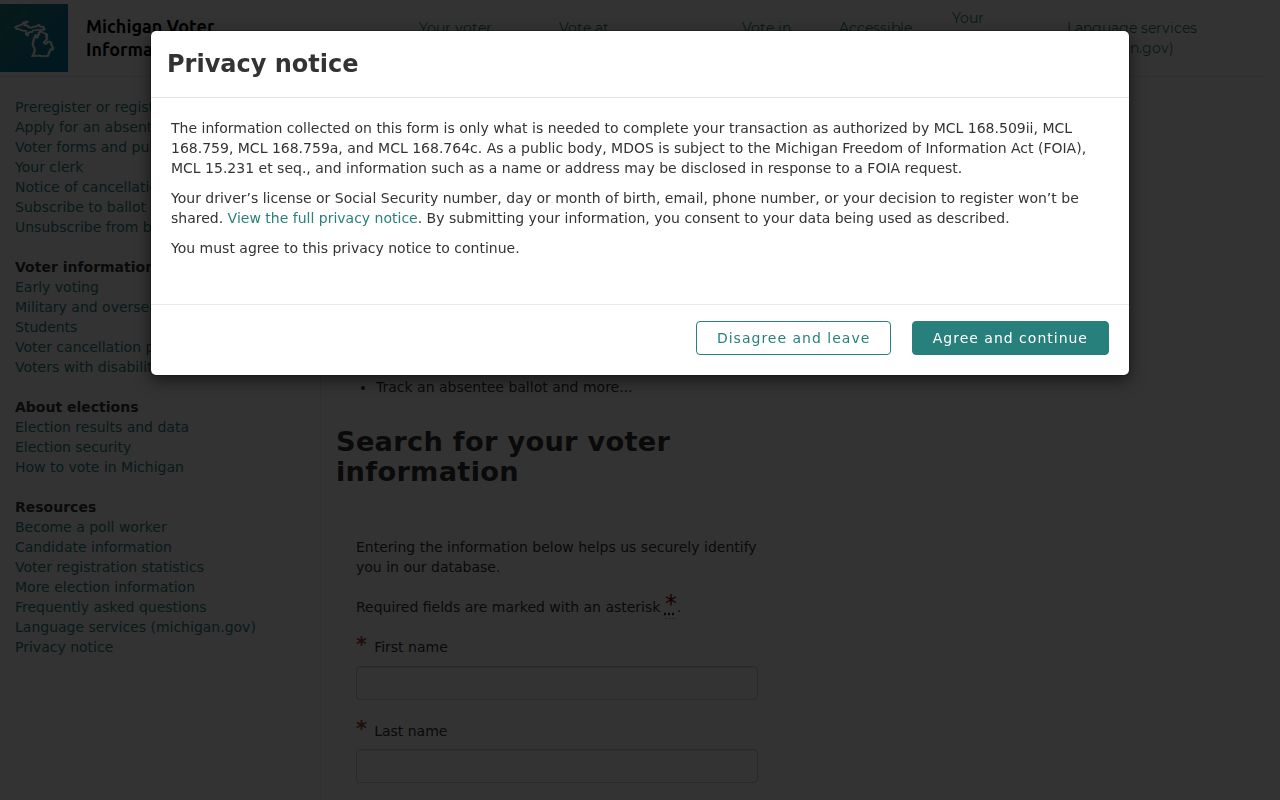
The clerk handles what a self-check cannot. For Georgetown Township records questions beyond a lookup, the township clerk or a formal QVF request is the right next channel.
Georgetown Resident Status Searches
Some official systems answer only narrow status questions. Michigan OTIS covers prisoners, parolees, and probationers now supervised or discharged within the prior three years, with FOIA-exempt records also outside its scope. County-jail-only records are left out. Unsentenced people and older discharges are excluded too. Ottawa County's jail lookup covers current custody only. A status result should be confirmed with the responsible agency, never treated as proof of identity or a conclusion about a person. The official OTIS service identifies its search route and coverage boundaries before any name query.
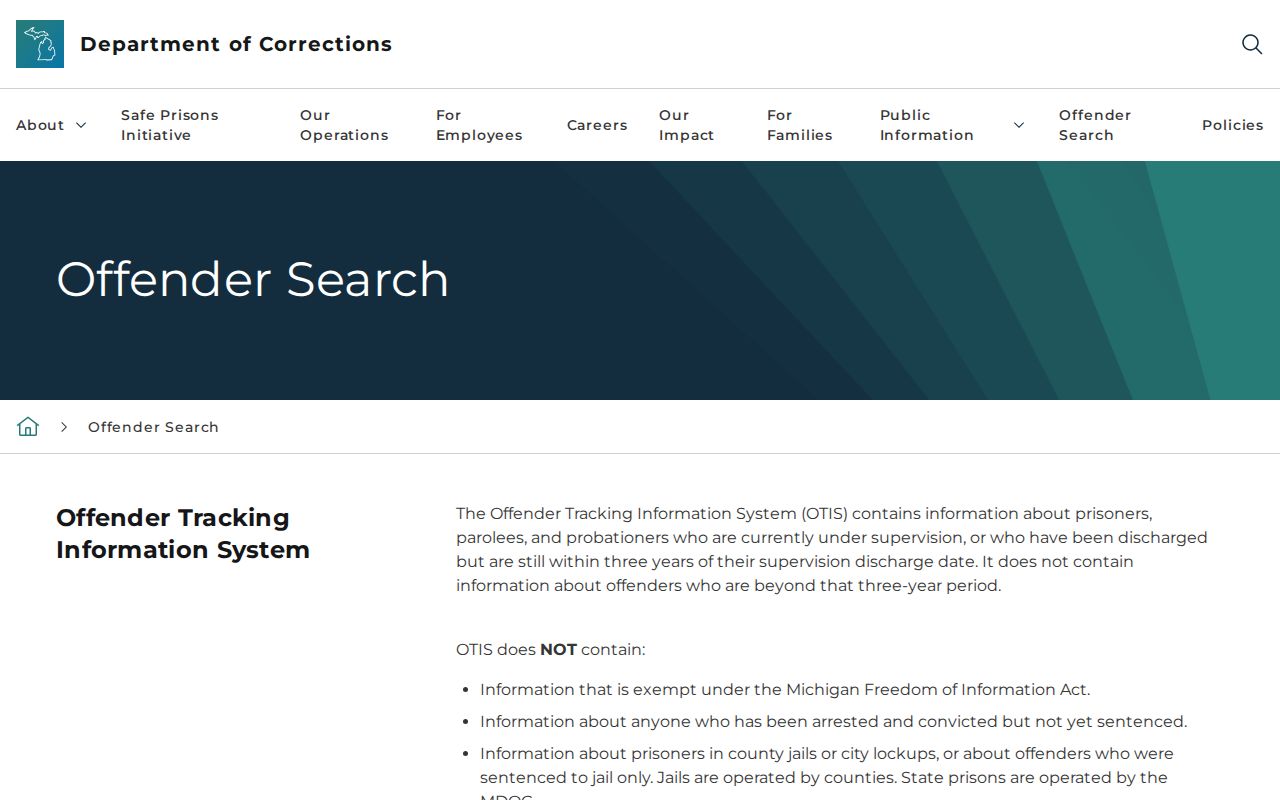
OTIS answers status questions only. A Georgetown Township name search still needs separate local evidence for place and identity. The State Police registry is a separate source. Its Public Sex Offender Registry offers legal notices and search modes for name, number, street, city, county, ZIP, and limited radius mapping. It is a public subset with exclusions. The registry warns its information may be inaccurate. Registry information cannot be used to injure, harass, or commit a crime. For immediate safety concerns, use law-enforcement channels. Do not attempt direct contact through a records search.
The Michigan State Police registry search presents the published search categories and its use warning.
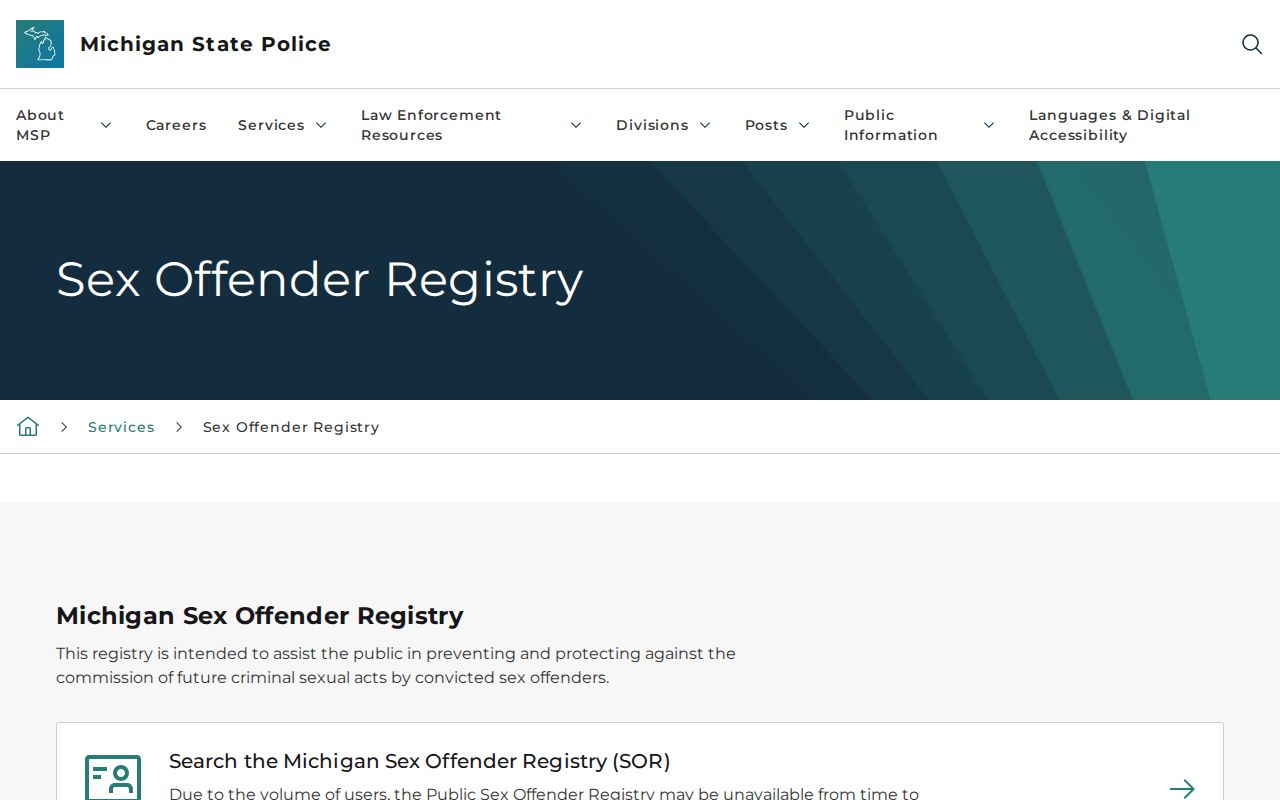
The registry was never meant to serve as a general residents directory. A name or address match on its own is not a verified identity record.
Verify a Georgetown Resident Carefully
Georgetown carries many Dutch and German compound surnames. Common names make any single result weak. Keep spelling variants like Van, Vander, and De, and include initials, married names, and nicknames. Insist on at least two independent matches. A parcel PIN paired with a spouse and birth year beats a repeated name, and so does a court location plus filing date or a deed party tied to a probate record. Note the label each source assigns the person. Owner, mailing recipient, voter, party, decedent, officer, or heir all carry different weight.
- Search the Ottawa owner-name roll and preserve the PIN, situs address, mailing address, and the result date.
- Use that name and its variants in the deeds index, then compare the recording date, parties, parcel number, and related instrument.
- Check MiCOURT or an event-specific vital index only for a corroborating time, place, relationship, or case number.
- Ask the named custodian for inspection, a docket, or a certified copy when an official record is needed.
- Docket
- A court's dated list of filings, hearings, orders, and case events.
- Index and image
- An index identifies a record; the image is the underlying document and may be restricted or charged separately.
- Certified copy
- A custodian-issued copy carrying the certification required when a formal record is needed.
Note: A matching mailing address may help trace correspondence, but never relabel it as a current residence without separate evidence.
Georgetown Resident History Leads
The Georgetown Township Public Library and the Jenison Historical Association hold local-history collections. These help when current databases run dry. The history room sits in the lower level shared by the library and township building. Volunteer staffing runs Wednesdays from 11 a.m. to 1 p.m. Still, confirm before visiting. In-house resources include Ancestry Library Edition and MyHeritage through MeL. There are also Grand Rapids Press obituary material, cemetery files, USGenWeb, census records, schools, yearbooks, maps, land records, churches, and township records.
Yearbooks, census pages, a dated obituary, and cemetery material often outperform an undated modern result. This matters when you track a former classmate or a past Georgetown household. The Archives of Michigan adds depth here. Its guide places Georgetown voter books, tax rolls, chattel mortgages, school records, and naturalization material in distinct date bands. Ask the librarian or a JHA volunteer for a catalog lead, a title, or a box reference. Then confirm the underlying document with the listed keeper.
Georgetown Resident Privacy Boundaries
Michigan's FOIA law, 1976 PA 442, MCL 15.231–15.246, gives anyone a way to request public records. It does not override confidentiality that attaches to a specific record. The Address Confidentiality Program created by 2020 PA 301 offers a substitute address for people at risk of harm. Courts can also seal, expunge, or suppress files. Juvenile matters are often unavailable. So when an official residents directory search hits a wall, DMV addresses, utility accounts, private rosters, and protected voter rolls are not a lawful workaround.
Errors belong with the office that holds the record. Ottawa County's property and GIS records include an error-reporting path. A recorded document may need a corrective instrument or a court remedy. Court mistakes go to the court of record, and vital record corrections follow county or MDHHS procedures. FOIA generally requires a response within five business days of legal receipt. A ten-business-day extension is possible. Inspection, digital copies, or paper copies can be requested where the law permits.
Ottawa County's FOIA tracker is the documented online gateway, and it requires an account to submit a request.
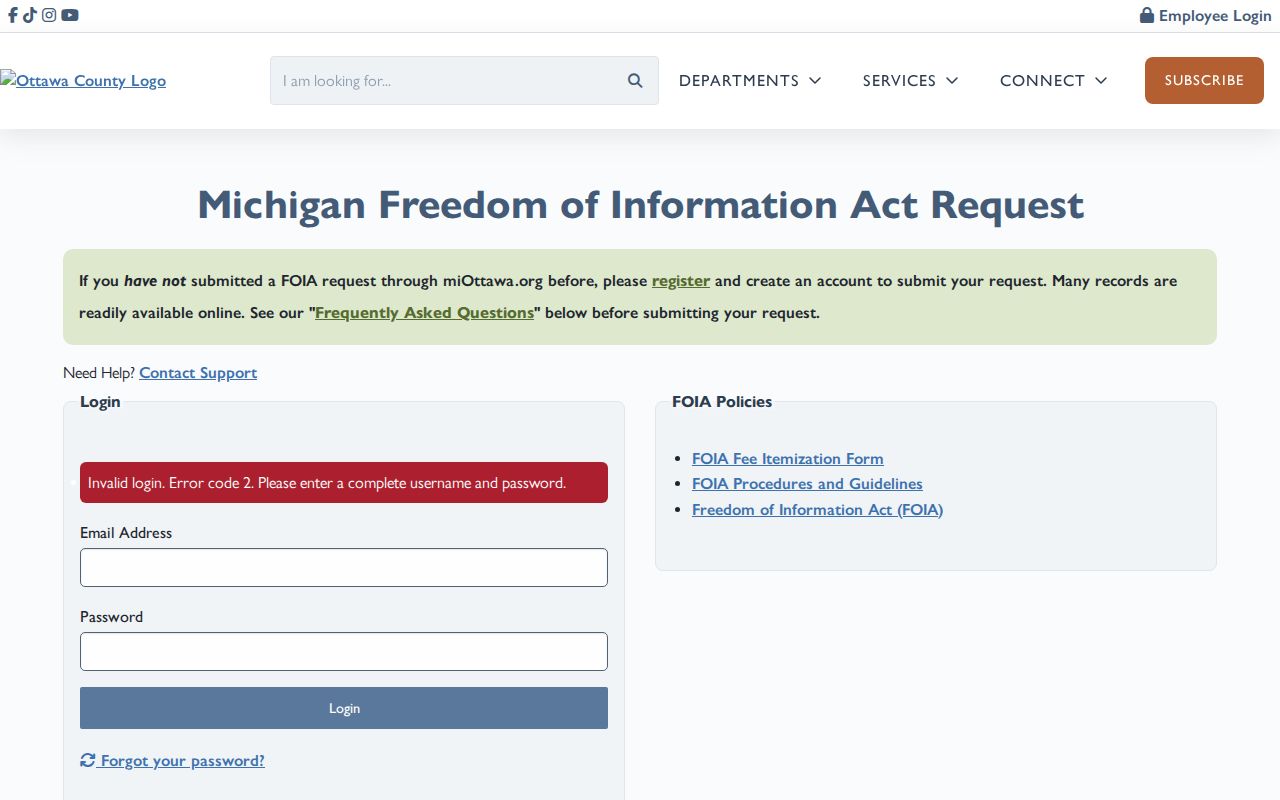
A record that never made it online still has a custodian. Describe the name variants, the address or parcel, the record type, and the date range in your request. Then ask about inspection, copies, and any exemption that might apply.
Lawful use. Use Georgetown Township records for personal, lawful research. Michigan stalking laws, including MCL 750.411h, prohibit using address or record information to stalk, harass, intimidate, or harm someone.